PFAS Regulation: What the Second Consultation Means for Plant Operators Fluoropolymers in Sealing Technology: The Case for a Differentiated Approach to PFAS Regulation
The PFAS debate covers more than 10,000 substances—among them fluoropolymers such as PTFE that have been critical components in sealing technology for decades. At IDT, we believe regulation needs to be precise, not sweeping: treating all PFAS substances identically would disregard real engineering constraints for which no equivalent alternatives currently exist.
At the same time, we work closely with our customers to cut through the complexity: jointly mapping which sealing applications can already switch to PFAS-free materials today, and clearly identifying where fluoropolymers remain the only technically viable option. That honest, application-by-application assessment is what drives sound decisions in procurement and plant engineering.
PFAS-Free Gaskets: Where the Technology Delivers—and Where It Falls Short
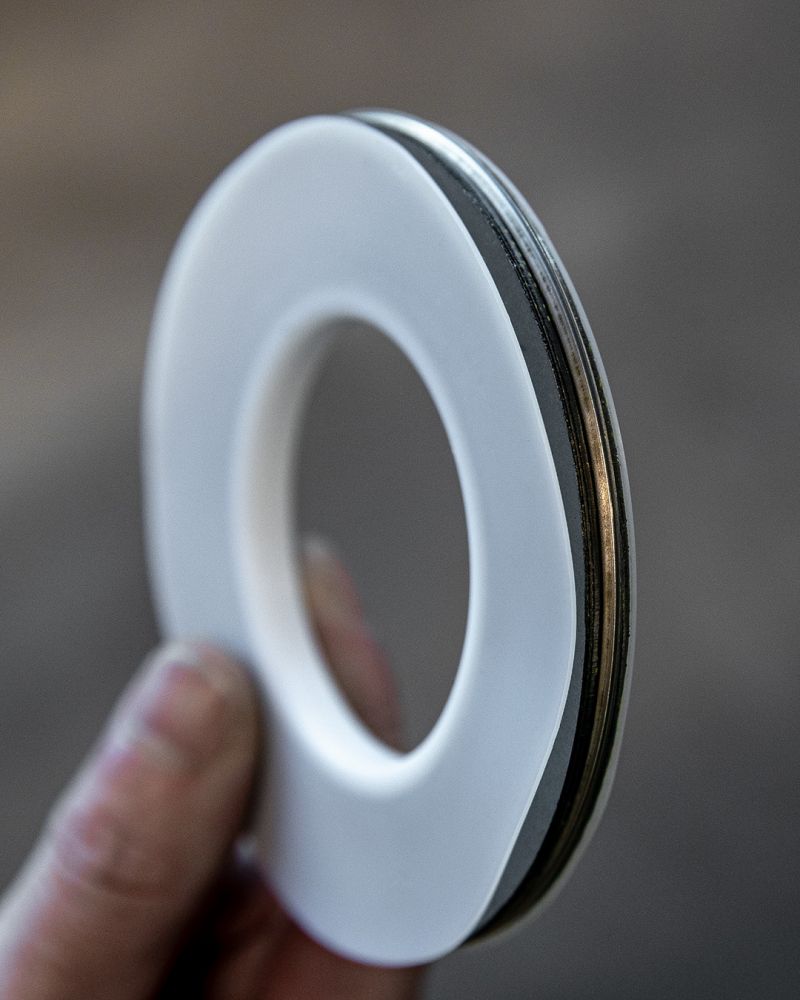
“PFAS-free” is nothing new in sealing technology. Materials such as graphite and metal have always been free of fluoropolymers and are a standard part of IDT’s product portfolio. For many applications, these materials are a proven and reliable choice—and we help customers make the most of them.
The picture changes with fluoropolymers such as PTFE and modified PTFE [mPTFE]. These materials are not PFAS-free—but they deliver performance that nothing else on the market matches today: near-universal chemical resistance, low-friction properties essential for dynamic seals, and the ability to meet stringent fugitive emission limits. In the chemical industry in particular, securing a targeted exemption for these materials is not a regulatory preference—it is an operational necessity.
IDT’s field data from application consulting and material qualification confirms:
- approximately 30% of the PTFE seals currently in use cannot be readily replaced
- in emission-critical and dynamic applications, 40–60% of connection points cannot meet required leakage rates without fluoropolymers
The numbers speak clearly: this is not about defending PFAS as a category. It is about making the case—with data—for the specific substances that cannot yet be replaced. That is exactly what IDT is doing as an active participant in the consultation process.
How IDT Helps Customers Navigate the Second Consultation Phase
The second consultation marks a significant shift from the first: the debate has moved on from whether to restrict PFAS to precisely how—which applications qualify for exemptions, and what transition timelines are realistic. For operators and procurement teams, that distinction matters.
For operators and procurement managers partnering with IDT, practical support includes:
- A joint review of your gasket inventory: identifying which applications are already PFAS-free candidates today
- Technical assessment of substitution options—with a clear view of where fluoropolymers remain the only viable solution
- Continuity of supply for PTFE and mPTFE gaskets: IDT has strategically built up stock to keep customers fully supplied throughout the transition period
Beyond individual customer support, IDT participates in a task force within the Sealing Technology Working Group to help companies across the sector engage effectively with the consultation: providing a practical guide to its structure, clarifying what each question actually asks, and advising on where specific information will have the most impact. The character limits—2,000 to 5,000 per field—make this kind of preparation essential for anyone with technically complex use cases.
IDT Podcast: Perspectives from Jörg Skoda and Dr. Frauke Averbeck [BAuA]
In the latest IDT podcast episode, Jörg Skoda sits down with Dr. Frauke Averbeck, scientific advisor for REACH and CLP at the Federal Institute for Occupational Safety and Health [BAuA], to discuss where the process stands today. Three topics take center stage:
- Why ECHA’s substance group approach casts too wide a net—and why 8 sectors, including sealing applications, received insufficient scrutiny from the committees
- Where substitution is viable today—and where real-world testing shows that current alternatives still fall short
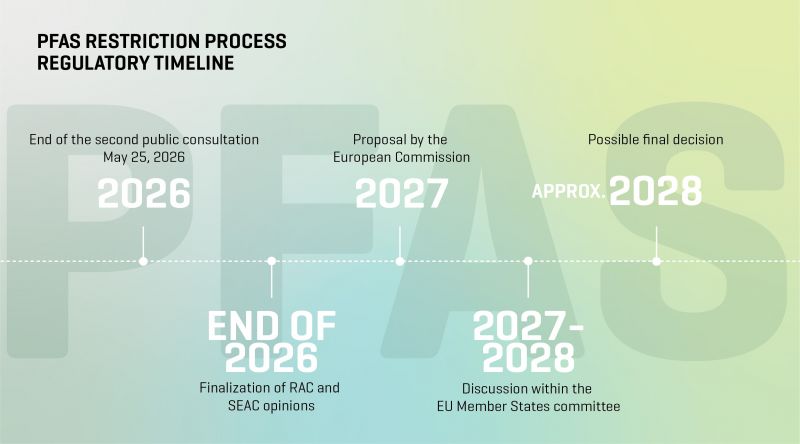
- The realistic timeline: SEAC final opinion by end of 2026, Commission decision realistically in 2027/2028—and what that means for investment and planning certainty across the industry
We all want PFAS to be regulated. But we’ve found that in practice, it simply doesn’t work to treat everything the same. Hardly anyone knows all 10,000 PFAS substances, and there are many areas where we still can’t even assess the consequences of the restriction today.
Where Things Stand: ECHA Committee Opinions and the Second Consultation
ECHA’s two scientific committees—the Risk Assessment Committee [RAC] and the Committee for Socio-Economic Analysis [SEAC]—have taken significant steps toward EU-wide action on PFAS.
The RAC’s final opinion confirms that PFAS pose lasting risks to human health and the environment, supporting an EU-wide restriction as an effective risk reduction measure. The SEAC’s draft opinion highlights the need for targeted exemptions to keep the restriction proportionate and workable in practice.
The public consultation on the SEAC draft is open until May 25, 2026. Once comments have been reviewed, the SEAC will finalize its opinion by end of 2026, completing ECHA’s scientific evaluation. The European Commission and EU Member States will then take the decision on the restriction.
Further reading on the ECHA website:
- ECHA supports PFAS restriction with targeted exemptions
- ECHA launches consultation on SEAC’s draft opinion on PFAS
Conclusion: The Case for Differentiation and Next Steps
IDT’s position is clear: fluoropolymers such as PTFE should be exempted from the PFAS restriction for as long as no technically equivalent alternatives exist. That position is backed by data, not by a preference for the status quo. In parallel, we are actively pursuing alternatives—in ongoing development projects with customers and material suppliers, including current trials targeting a reduction in PTFE content as a first step toward innovative solutions for selected applications.
Key dates for operators and procurement teams: the consultation window closes May 25, 2026; a political decision is unlikely before 2027/2028.
IDT has built up strategic PTFE and mPTFE inventory to guarantee reliable supply throughout the transition. Get in touch—we’ll walk you through a technical review of your gasket portfolio and with questions regarding the second public consultation.
FAQ: PFAS Restriction and the Second REACH Consultation
Because the debate has shifted from whether to restrict PFAS to how. The central question now is proportionality: which applications can continue, where are exemptions warranted, and what transition timelines are realistic.
The first consultation gathered foundational data on PFAS applications. The second focuses specifically on the impact of a potential ban—above all the economic and technical consequences for industry. Companies are expected to quantify what a restriction would mean for their operations: costs, supply chain exposure, and production continuity.
In regulatory terms, proportionality asks whether a PFAS restriction is justified given the balance of costs, benefits, and available alternatives. It is the key test for whether exemptions or transition periods will be granted for specific applications.
A common misconception is treating the second consultation as an opportunity to correct or update background data. It is not. The purpose is to demonstrate the real-world impact of a potential restriction—quantifying what it would mean operationally, economically, and technically for your business.
The consultation is tightly structured, with per-field character limits of just a few thousand characters. Compressing technically complex use cases into that space is a real challenge—and risks key information being lost if submissions are not carefully prepared.
A critical one. The more solid data industry submits on applications, substitution options, and economic impact, the better SEAC can assess proportionality. Without that input, the decision defaults to the political level—with far less technical grounding.
The European Commission would have to act without a complete scientific basis. That shifts the decision further into the realm of political judgment—with less technical evidence to guide it.
In some applications, yes—but across many safety-critical and process-critical areas, no. In sealing technology in particular, IDT’s field data and ongoing material trials confirm that a significant share of applications cannot be readily substituted today. IDT is actively developing alternatives—including projects targeting a reduction in PTFE content—but for dynamic sealing and emission-critical processes, no material currently matches PTFE’s full performance profile.
PFAS span thousands of substances across vastly different application areas. A one-size-fits-all restriction risks sidelining applications that are technically essential. Sealing applications are among the 8 sectors that received no in-depth evaluation in the current ECHA process—despite being explicitly included in the background document. IDT considers this a material gap and is pressing for sealing applications to receive appropriate consideration in the political decision-making phase.