PTFE After Three Years of PFAS Debate: More Clarity – But No Simple Answers
The second public consultation in the European PFAS restriction procedure has concluded. At the same time, the sale of Dyneon and the announced continuation of the Burgkirchen site is a relief for many users.
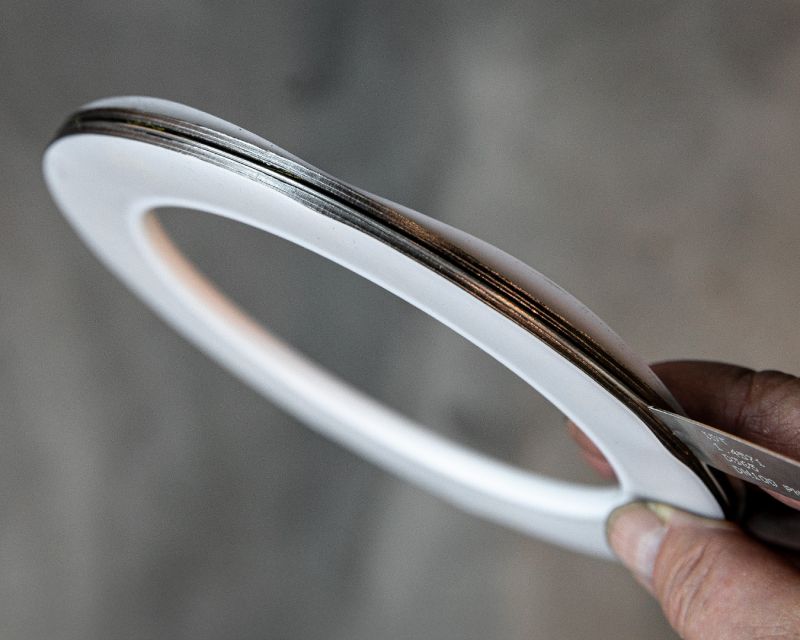
Three years into the PFAS debate, one might expect the key questions to have been answered by now. In reality, a more nuanced picture has emerged: we now know considerably more about critical applications, potential alternatives, and the importance of fluoropolymers for the process industry. At the same time, many of the questions that were occupying operators back in 2023 remain current and unresolved.
What Has Changed Over the Past Three Years
The PFAS debate has led to sealing materials being scrutinised more intensively than ever before. Alternative materials have been evaluated, new mPTFE grades qualified, and numerous technical statements submitted to the restriction procedure.
The role of sealing materials is also being assessed more carefully than at the start of the debate. Applications long taken for granted are increasingly being questioned in terms of their technical requirements.
At the same time, it has become clear that many questions are more complex than originally assumed. Evaluating sealing materials does not end with chemical resistance. Temperature, pressure, leakage requirements, long-term behaviour, standards, and approvals all play an equally important role. Jörg Skoda, Technical Director at IDT, summarises the situation:
Three years into the PFAS restriction process, technical data and practical experience present a more nuanced picture. In many applications, alternatives require more careful evaluation – and in some cases, fluoropolymers cannot currently be replaced.
Dyneon Remains on the Market for Now – Why This Is Important News
The sale of Dyneon has been received positively by many companies. This is understandable.
Numerous specifications continue to be based on well-established Dyneon materials such as TFM 1600. Many operators have years of experience with these materials, existing approvals remain valid, and ongoing projects do not need to be reassessed at short notice.
At IDT too, we are currently seeing increased demand for Dyneon materials. The common grades remain available from us, which currently gives many customers planning certainty. However, which products Dyneon will bring back into production in the long term cannot yet be reliably assessed.
Why the Underlying Challenges Remain
The continued operation of Dyneon does not, however, answer all the questions that have arisen from the PFAS debate.
The regulatory process is ongoing. The final shape of any potential restrictions remains open. At the same time, it remains to be seen how the European fluoropolymer market will develop in the long term and what impact the changes of recent years will have on supply chains, specifications, and material strategies.
Above all, one technical question remains:
Which materials are suitable for which applications in the long term, and how can their suitability be reliably demonstrated?
The Technical Reality: There Is Rarely a Universal Alternative
Public debate often asks for "the replacement for PTFE". The reality in the process industry looks different.
Depending on the application, sealing materials must meet a wide range of requirements:
- Resistance to aggressive media
- Temperature ranges often exceeding 100 °C
- High surface pressures
- Low leakage rates
- Regulatory requirements such as TA Luft
- Reliable long-term performance
There is therefore generally no universal 1:1 substitution.
Instead, materials must be evaluated on an application-specific basis.
Graphite can be an excellent solution in certain applications. PEEK offers interesting mechanical properties. Engineering thermoplastics such as PE, PP, or POM can be suitable in selected areas of use. At the same time, each of these materials has limitations that must be taken into account in the evaluation.
This is also why many current developments focus on alternative mPTFE materials, which aim to replicate existing property profiles as closely as possible.
What Operators Can Do Today
Three years of PFAS debate have shown that blanket answers rarely help.
A more effective approach is a structured review of your own applications:
- Which PTFE applications are safety- or emissions-critical?
- Which materials are specified in current specifications?
- Where do qualified alternatives already exist?
- Which applications should be documented and prioritised?
Many companies have already begun this process. For others, the current situation presents an opportunity to systematically review existing material strategies. IDT provides support with technical consulting, test data, and a broad material portfolio – application-specific and without blanket recommendations.
The debate is often reduced to individual materials. In practice, however, it is about applications, approvals, and operational safety. That is precisely why it is worth taking a close look at the relevant boundary conditions.
FAQ: PTFE, PFAS and Alternative Sealing Materials
No final legislative proposal is currently in place. The PFAS restriction procedure remains ongoing within the regulatory process.
For many applications, there is no universal 1:1 alternative. The suitability of potential materials depends on the respective operating conditions.
In addition to alternative mPTFE materials, graphite, PEEK, and various engineering thermoplastics are being assessed.
In the short term, planning certainty for existing applications improves. Long-term impacts on market structures and product portfolios remain to be seen, as it is not yet known to what extent Dyneon production will be continued.
Yes. IDT continues to stock the common Dyneon materials – including TFM 1600 and TFM 4105. In addition, modified PTFE materials from Daikin and GFL are available.
A structured evaluation of existing applications, specifications, and potential alternatives is recommended. Technical documentation of critical applications can help prepare future decisions on a well-founded basis.
Questions About Material Availability or Substitution?
Not every application can be assessed in blanket terms. We support you with the technical classification of your requirements and possible material options.
Contact us