What makes SMEs so successful?
Our answer: proximity, speed, and the ability to get things done.
German small and medium-sized enterprises (SMEs) are under pressure: growing regulation, international competition, rising customer expectations, digitalization, and a shortage of skilled workers are creating increasingly complex challenges. At the same time, SMEs have competitive advantages that large corporations can hardly replicate – from customer proximity and technical expertise to speed, flexibility, and pragmatism.
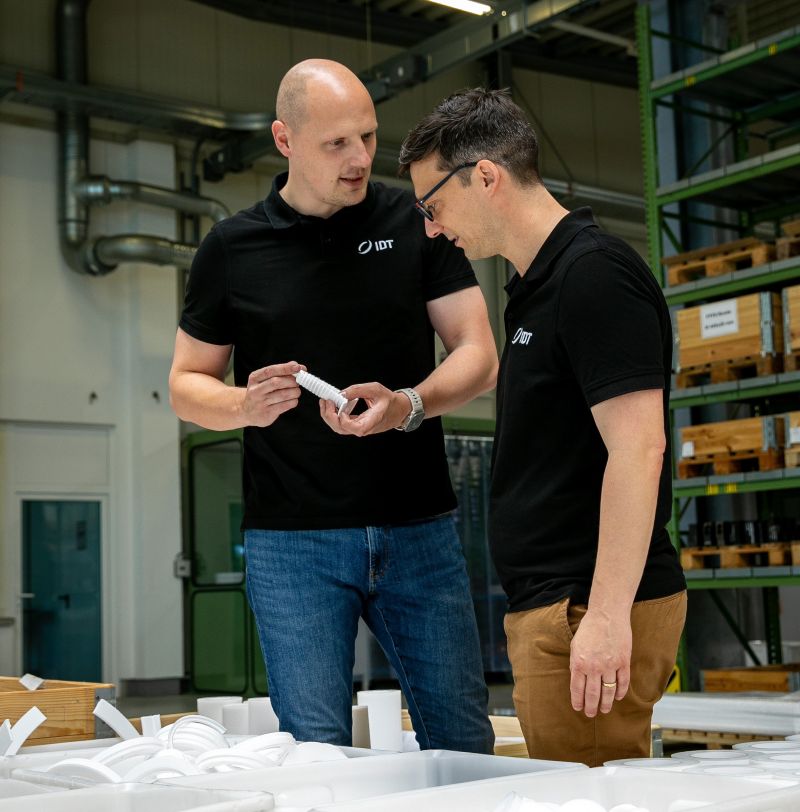
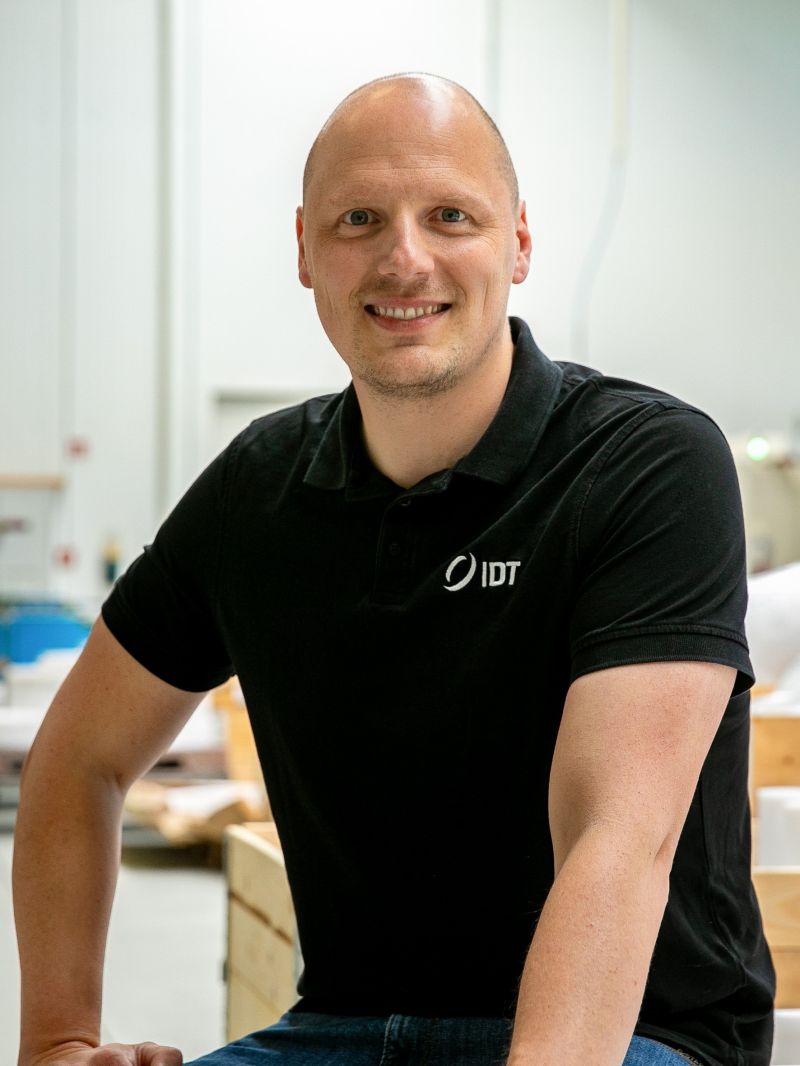
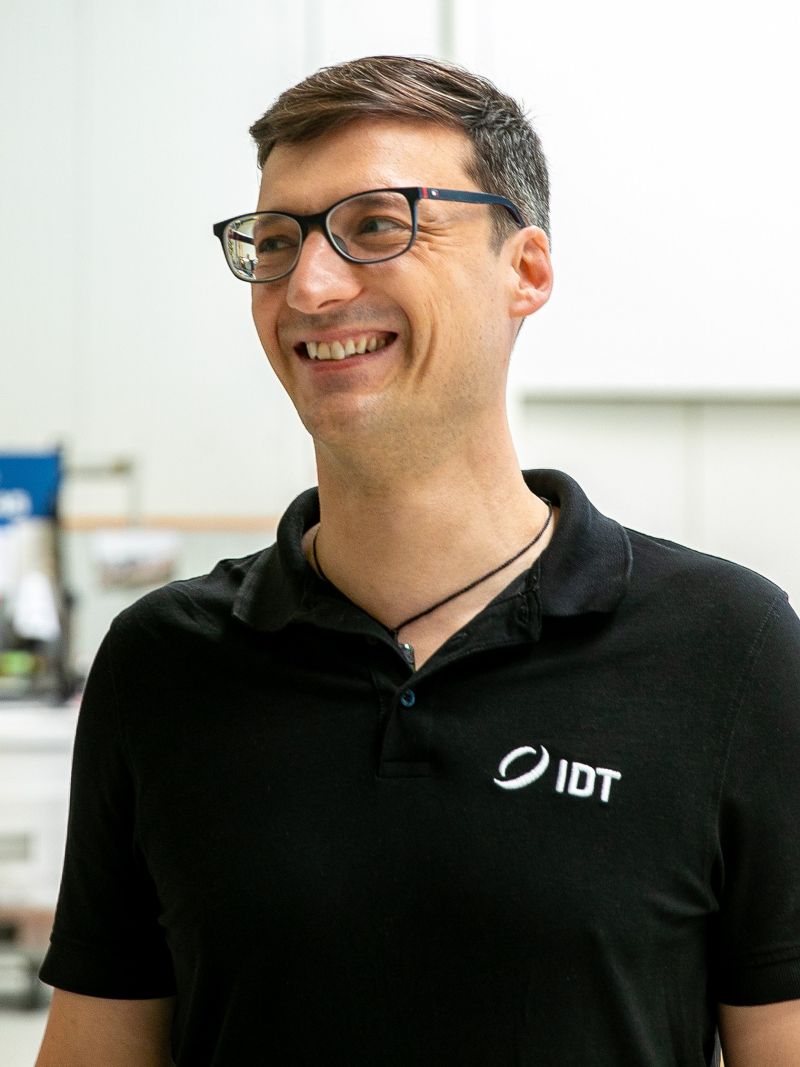
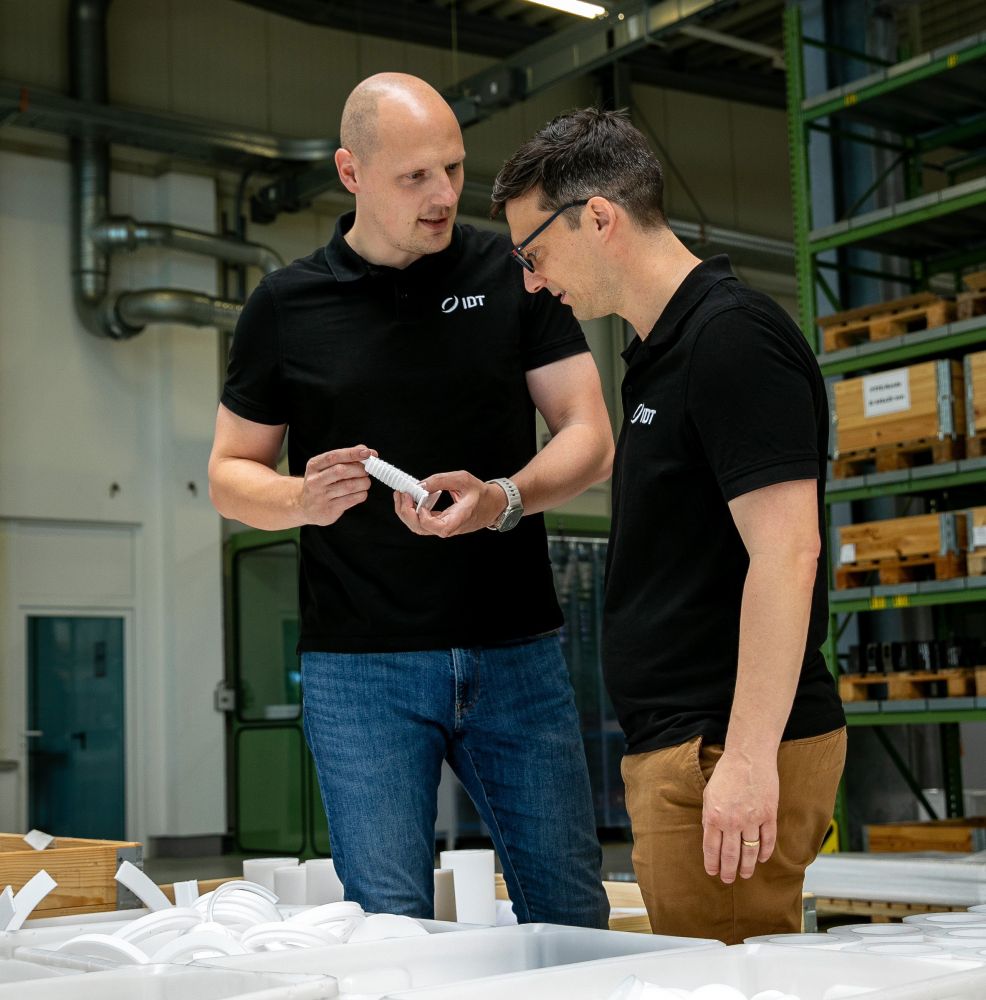
How can SMEs leverage these strengths effectively, where do they reach their limits, and what does it take to remain internationally competitive in the future? Philipp Leiding, Head of Sales for the DACH region at IDT, and Matthias Muehl, responsible for International Business Development, discuss these questions in the current issue of Industrial Valves.
Mr. Muehl, you lived abroad for many years, built your own company in New Zealand, worked for large corporations, and then made a conscious decision to move to the German SME sector. What motivated you to do that?
Matthias Muehl: The decision was based on several factors. New Zealand is a beautiful country, but it's on the other side of the world; you really feel that over time. Moving closer to Europe again and switching to the SME sector was a conscious decision, not a stopgap measure. I was already familiar with IDT from my time in New Zealand. What convinced me was the combination: a technically strong company, manageable structures, and genuine freedom to shape things. In a large corporation, you have reach and budget—but decisions take time. In a small-to-medium-sized business, you can make a difference.
Mr. Leiding, you've been with IDT since 2013. What has changed the most in recent years—for example, in terms of customers, the market, or requirements?
Philipp Leiding: The response time isn't what it used to be. In the past, you might have had a week to prepare a quote. Today, customers want a reliable answer within 24 hours—not just on price, but also on availability and delivery time. This isn't an isolated phenomenon. It's a structural shift in expectations that affects the entire industrial SME sector. At the same time, what customers expect from suppliers is changing: they no longer just want someone who delivers products, but someone who understands technical problems and thinks proactively. That requires different skills than it did five years ago.
Matthias Muehl: On the international front, another factor is that customers today come to meetings much better informed. They've done their research, obtained competitive quotes, and compared specifications. Anyone who doesn't offer real added value very early on will be reduced to nothing more than a price comparison portal.
That sounds like a balancing act between efficiency and personal connection. How do you resolve that?
Leiding: Yes. Efficiency is important. But the major danger with streamlining and efficiency programs is that you lose that personal connection. Our customers and contacts are a diverse mix: technicians, buyers, and managing directors of medium-sized companies. They want a person who understands their problems, not an anonymous system in the background. Digital processes are a tool, not a substitute for real relationships. Small and medium-sized businesses would be well advised not to confuse the two.
Digital processes are a tool, not a substitute for real relationships.
Muehl: Internationally, it's even more complex. A customer who buys in Germany, Poland, and France doesn't want three different points of contact with varying terms and response times. The challenge is to maintain a local presence despite centralized management. And cultural differences come into play: In some markets, a personal visit is still crucial, while in others, almost everything is done digitally. Any medium-sized business that wants to grow internationally must be flexible enough to accommodate both—without losing its own identity in the process.
What role does digitalization play for industrial SMEs, and what does that mean for the people in the company?
Leiding: The more digital processes become, the more important personal consultation becomes—that is my firm conviction. We actively use digital channels to generate customer contacts. But the actual relationship-building still takes place through conversation. What has changed is the skill set required of the people who do this job. Today, they must be both technically savvy and digitally proficient. Data interpretation, handling various platforms, and still being persuasive on the phone or during customer visits. That combination isn't easy to find.
Mr. Muehl, you've worked as an entrepreneur in New Zealand, as an employee in a large corporation, and now in a small-to-medium-sized business. What really sets these worlds apart?
Muehl: The difference becomes apparent as soon as you have to make decisions. In a large corporation, there are clear processes, large budgets, and a high degree of specialization, but also long decision-making processes and little room for deviation. In a small-to-medium-sized business, the opposite is true: you can present an idea in the morning and start implementing it in the afternoon. As a small business owner in New Zealand, I experienced firsthand how quickly SME suppliers respond, while large corporations let the same inquiries sit for weeks. Speed and customer focus aren't just empty promises in SMEs—they're a living reality.
Speed and customer focus aren't just empty promises in SMEs—they're a living reality.
Leiding: The buzzwords "fast, pragmatic, decisive" are no myth. They very accurately describe the flat hierarchies in SMEs. If the arguments are convincing, a decision can be made on the very same day. In a large corporation, you would have needed a committee for that. SMEs also support customers where large corporations stop. We also help customers break out of their "specification bubble"—not to water down standards, but to pragmatically find the best solution. That's a skill you can't simply copy.
By international standards, Germany is seen as rule-driven and sometimes slow to act. Is that a structural disadvantage?
Muehl: In some respects, yes, but that's just complaining from a position of privilege. When you return from abroad, you realize: Germany works. The infrastructure, the reliability, the quality standards. The problem is that our adherence to standards sometimes leads to rigidity. Abroad, certain issues are resolved more pragmatically and quickly. When markets become more volatile, speed is a real competitive factor—and that's where we in Germany sometimes struggle.
Leiding: I'd add this: Small and medium-sized businesses can cushion that well internally. If the external environment remains complex, you can't create additional complexity internally. Clear processes, quick feedback, and good data—these aren't just nice-to-haves anymore; they're prerequisites.
Is "Made in Germany" still a door-opener in international business?
Muehl: Yes, but you have to put it into perspective. Perhaps "Made in Germany" doesn't carry quite the same appeal as it did twenty years ago. In the industrial sector, German products still stand for reliability, technical expertise, and high standards. That's a real advantage that we should confidently highlight. The real issue is something else: Customers are no longer willing to pay double just because the product comes from Germany. Quality must therefore prove itself in terms of value for money, not just through the label.
Many small and medium-sized enterprises are technologically strong but lack visibility on the international stage. How do you explain that?
Muehl: There are cultural and structural reasons. Large corporations have different budgets, different marketing departments, and a different reach. In the SME sector, marketing is often an afterthought. Here, companies rely on performance and word of mouth. On the one hand, that's endearing, but in international competition, it can become a disadvantage. Visibility doesn't happen on its own, even when the substance is there. Today, you have to be active online, be discoverable via AI, and establish a presence. Americans do this better—sometimes to excess, but with results.
Leiding: Yet small and medium-sized businesses have a genuine unique selling point: they truly take care of their customers. Where large corporations stop responding personally once a certain volume is reached, small and medium-sized businesses are still there—with a real point of contact, technical advice, and a close relationship with customers. That's what needs to be communicated to the outside world.
The shortage of skilled workers is ubiquitous among small and medium-sized businesses. How acute is this problem for you, and what really helps?
Leiding: Good employees are rare, and competition for talent is fierce. What helps us is that we place a strong emphasis on internal development—hiring people from technical backgrounds who are new to sales and training them in sales. It takes longer, but we can be sure that these people will ultimately embody the IDT DNA, truly know the company, and understand what they're selling. Plus, as an employer, you have to be attractive—not just on paper. The traditional sales force with company cars is no longer enough as an incentive.
Muehl: What many people underestimate is that international sales today means being present on a wide variety of channels simultaneously. WhatsApp, WeChat, local platforms. This is a nightmare for German IT security, and internally, clear structures are needed to ensure these various strands don't descend into chaos. On top of that, language skills are essential—English is a minimum requirement, and additional languages are a real advantage. And a willingness to travel remains indispensable, no matter how much can be done digitally.
How do you lead a team through a phase in which so much is changing at once?
Leiding: Through open communication—and in both directions. I don't make a distinction based on who I'm talking to. Anyone who wants to give me honest feedback will find an open door, and whoever receives it should be able to handle it. The fact that I started as a staff member and worked my way up through several levels helps. I can still remember what it's like not to be at the very top. In my view, top-down leadership doesn't work. What does work: leading by example. Passion is contagious. When you're fully committed yourself, it inspires others to follow.
Muehl: Flat organizational structures help here, too. If someone has a good idea, there's no need to convene a discussion group. Employees appreciate that—the feeling that their contributions can really make a difference.
What are the most important skills that small and medium-sized enterprises need to develop in the coming years?
Muehl: Speed and adaptability. Medium-sized companies must stay fast and become even faster. That's only possible if processes are designed for flexibility, not rigidity. Those who aren't willing to change will be replaced by others in the medium or long term. That sounds harsh, but it's the reality.
Leiding: Stay close to customers, despite all the digitalization. Technology is a tool, not a substitute for real relationships. And be open to change within your own organization as well.
In closing: Are there any companies or individuals whom you look up to with particular admiration?
Muehl: What fascinates me are companies that consistently reinvent themselves. Specifically, Rocket Lab in New Zealand comes to mind. A company that builds rockets and now collaborates with NASA. Back when the founder was asking about sealing solutions for his rocket, hardly anyone took him seriously. Today, the company is headquartered in Los Angeles, and its development has been a success story. That reminds me of IDT's founding story: Someone starts out alone, with an idea and the courage to take a risk, and over the decades, something sustainable emerges from it.
Leiding: What I admire in entrepreneurial personalities is the combination of long-term thinking, a sense of responsibility, and the willingness to remain steadfast even during difficult times. These are the values that lie at the heart of small and medium-sized businesses and that must be nurtured, even as pressure mounts.
Have a question or want to continue the conversation?
Get in touch
Downloads
Details: Article | EN | Last Changed 2026-08-24 | 17.95 MB